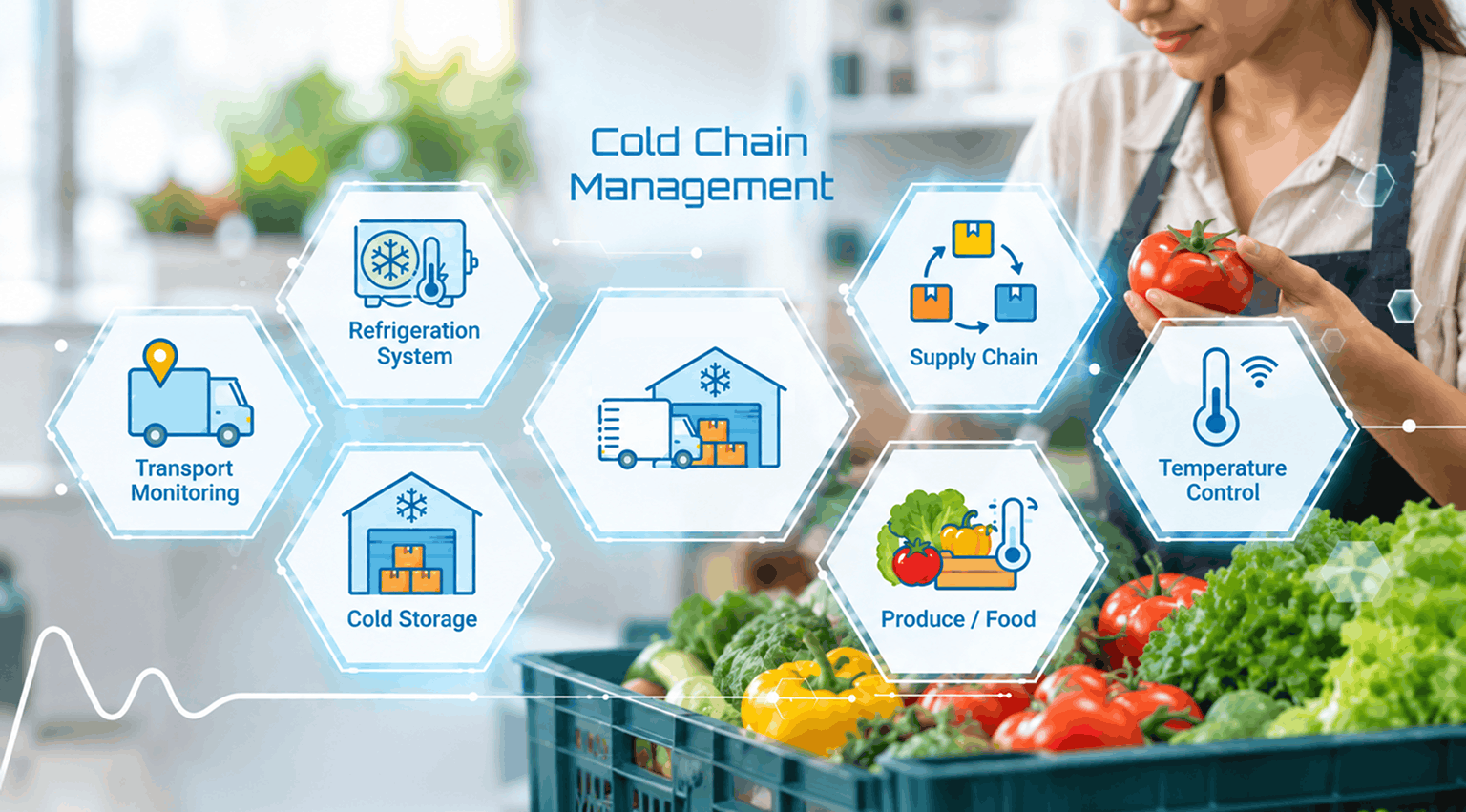
A customized transportation partnership that connects dedicated people, technology, carrier management, and continuous improvement.
Food, produce, and other temperature-controlled shippers face a distinct set of transportation challenges. Tight delivery windows, seasonal demand, product sensitivity, capacity fluctuations, and changing market conditions can make transportation operations especially complex.
Managing that complexity in-house requires more than arranging individual shipments. It involves coordinating people, processes, technology, carriers, performance data, and continuous improvement across the transportation network, all while keeping day-to-day operations running smoothly.
That is why many food and produce shippers turn to a customized freight management partnership.
As a managed transportation provider, RWI Logistics acts as an extension of a shipper’s team. We bring together dedicated people, transportation technology, carrier management, reporting, and logistics expertise in a solution designed around the shipper’s operation and business goals.
Jump To Section
The Partnership
What Is Managed Transportation?
Managed transportation, sometimes called customized freight management, is an ongoing partnership in which a logistics provider assumes responsibility for defined transportation functions across a shipper’s network.
Unlike transactional freight brokerage, which generally focuses on securing capacity for individual loads, managed transportation focuses on how the transportation operation works as a whole. The provider follows agreed-upon processes, uses shared technology and data, measures performance against established goals, and continually identifies opportunities to improve service, cost, and efficiency.
The scope can be tailored to complement a shipper’s existing team or support a more fully outsourced transportation operation. Depending on the needs of the business, a managed transportation program may include:
- Transportation network assessment and strategy
- Carrier procurement and RFP management
- Carrier onboarding and performance management
- Load planning and scheduling
- Mode, lane, and route optimization
- Transportation management system support
- API and system integrations
- Reporting, business intelligence, and KPI monitoring
- Process improvement and ongoing program reviews
Shipment execution may be part of the program, but it is managed within a broader strategy rather than approached one load at a time. The goal is to create a coordinated, visible, and continuously improving transportation operation.
Dedicated Support
A Dedicated Team Aligned With Your Operation
Transportation management requires consistent attention and clearly defined processes. For food and produce shippers, disruptions can quickly affect product quality, delivery commitments, and customer relationships. A missed appointment, limited capacity, or unexpected delay may require immediate action, but long-term success also depends on preventing recurring problems.
With a managed transportation partnership, shippers gain a dedicated team that learns their network, business rules, service requirements, and customer expectations. The team operates according to established procedures and works alongside internal stakeholders to manage daily transportation activity and broader program priorities.
This model gives internal teams additional expertise and operational support without requiring the shipper to build every capability in-house. It can also free employees to focus on customers, production, procurement, and other strategic priorities while RWI Logistics manages the agreed-upon transportation functions.
Connected Technology
Technology That Connects the Transportation Operation
Technology is central to managed transportation because it connects shipment activity, carrier information, tracking, and performance data within one operating environment.
A robust transportation management system, or TMS, can help standardize workflows, centralize shipment information, automate routine processes, improve tracking, and provide greater visibility across the transportation network.
For organizations managing freight manually or through disconnected systems, achieving this level of coordination can require a significant investment in software, implementation, integrations, maintenance, and training. Through a managed transportation partnership, shippers can use RWI Logistics’ established transportation technology and logistics expertise without building and supporting the full infrastructure themselves.
Greater visibility can help teams answer questions such as:
- Are shipments moving according to plan?
- Which lanes, modes, and carriers are performing best?
- Where are service failures or added costs recurring?
- How is transportation performance trending against established KPIs?
- Where can the network be consolidated or optimized?
The value extends beyond seeing where a shipment is. Connected data helps teams manage the transportation program more consistently and make better-informed decisions over time.
Network Strategy
Strategic Carrier and Network Management
Food and produce transportation networks must adapt to seasonal volume, regional shifts, customer requirements, and changing capacity conditions. Managed transportation helps shippers address these variables through a coordinated carrier and network strategy.
Rather than making isolated decisions for each shipment, RWI Logistics can help evaluate lanes, requirements, service expectations, and transportation modes across the broader network. Carrier RFPs, procurement, routing strategies, and performance measurement can then be aligned with the shipper’s operational goals.
Depending on the freight and lane, the transportation plan may incorporate truckload, less-than-truckload, refrigerated transportation, intermodal, or other solutions. This network-level approach can help shippers create appropriate options for different types of freight, prepare for seasonal changes, and reduce reliance on reactive decision-making.
Performance Insights
Greater Control Through Data, Reporting, and Governance
Managed transportation provides a framework for turning shipment data into business insight. Instead of reviewing activity only when a problem occurs, shippers and their managed transportation partner can monitor agreed-upon metrics and review performance regularly.
Reporting may reveal:
- High-cost lanes or facilities
- Recurring service issues
- Carrier performance trends
- Opportunities for route, load, or mode optimization
- Accessorial cost patterns
- Changes in transportation spend
- On-time pickup and delivery performance
Regular performance reviews help the shipper and provider align on results, priorities, and corrective actions. This governance is an important distinction of managed transportation: the partnership is accountable not only for today’s activity but also for improving the transportation operation over time.
Ongoing Optimization
Continuous Improvement for Complex Freight Networks
Transportation networks do not remain static. Customer requirements change, volumes shift, costs fluctuate, and new facilities or suppliers may be added. A managed transportation program should evolve with those changes.
By analyzing operational and performance data, RWI Logistics can help identify recurring challenges and opportunities for improvement. That may involve updating processes, adjusting routing strategies, reviewing carrier performance, improving system workflows, or evaluating different transportation modes.
This continuous-improvement approach helps food and produce shippers move beyond short-term problem-solving and build a transportation operation that becomes more efficient and resilient over time.
Built for Growth
Supporting Growth Without Rebuilding the Logistics Operation
As food and produce companies grow, transportation complexity often grows with them. New customers, facilities, suppliers, regions, and shipment volumes can strain internal teams and existing processes.
Building an in-house transportation operation to support that growth may require significant investments in people, technology, carrier management, integrations, and process development. Managed transportation offers another path.
By working with RWI Logistics as an extension of their organization, shippers can add transportation capabilities and adjust the scope of support as business needs change. The result is a flexible operating model designed to scale without requiring the shipper to recreate every resource internally.
Your Logistics Partner
Finding the Right Managed Transportation Partner
The right managed transportation solution should not be one-size-fits-all. Every shipper has different freight characteristics, systems, service requirements, customer expectations, internal capabilities, and business objectives.
A strong partner should begin by understanding the current operation, defining responsibilities, establishing processes and performance measures, and building a solution around the shipper’s goals. The relationship should also include clear communication, access to meaningful data, and a commitment to continuous improvement.
At RWI Logistics, our customized freight management approach can combine dedicated operational support, transportation technology, carrier management, reporting, and ongoing optimization in a program designed for each shipper.
Common Questions
Frequently Asked Questions
What is managed transportation?
Managed transportation is an ongoing logistics partnership in which a provider manages defined transportation functions across a shipper’s network. The scope may include planning, technology, carrier management, execution, reporting, performance measurement, and continuous improvement.
How is managed transportation different from freight brokerage?
Freight brokerage generally focuses on arranging capacity for individual shipments. Managed transportation focuses on the broader transportation operation, using dedicated resources, established processes, integrated technology, performance goals, and ongoing optimization to manage part or all of a shipper’s network.
Why do food and produce shippers use managed transportation?
Food and produce shippers often face tight delivery schedules, seasonal volume changes, temperature-sensitive freight, and complex customer requirements. Managed transportation can provide the dedicated support, technology, planning, visibility, and performance management needed to coordinate those demands.
How can RWI Logistics support food and produce shippers?
RWI Logistics can provide a customized program that combines transportation planning, carrier and RFP management, shipment coordination, technology, reporting, and continuous improvement based on the shipper’s network and business requirements.
Can managed transportation improve shipment visibility?
Yes. A managed transportation program can centralize shipment information and provide access to tracking, carrier performance, transportation costs, service metrics, and other operational insights. This visibility supports both daily decision-making and long-term improvement.
Does managed transportation help reduce internal workload?
Yes. By assigning defined transportation responsibilities to a managed transportation provider, internal teams can spend less time on routine coordination and recurring freight issues, maintain visibility into performance, and focus on strategic priorities.
Is managed transportation suitable for growing companies?
Yes. Managed transportation can help growing companies expand their logistics capabilities without making the same level of internal investment in additional staff, transportation technology, carrier management, and process development.
Why choose RWI Logistics as a managed transportation partner?
RWI Logistics provides customized freight management solutions designed around each shipper’s network, operational requirements, service expectations, and business goals. Our approach combines dedicated support, technology, carrier management, reporting, and continuous improvement.
Build Your Managed Transportation Solution with RWI Logistics
Ready to reduce the burden of managing transportation internally while gaining greater control and visibility across your network? Request a quote from RWI Logistics to discuss a managed transportation solution for your food and produce operation.