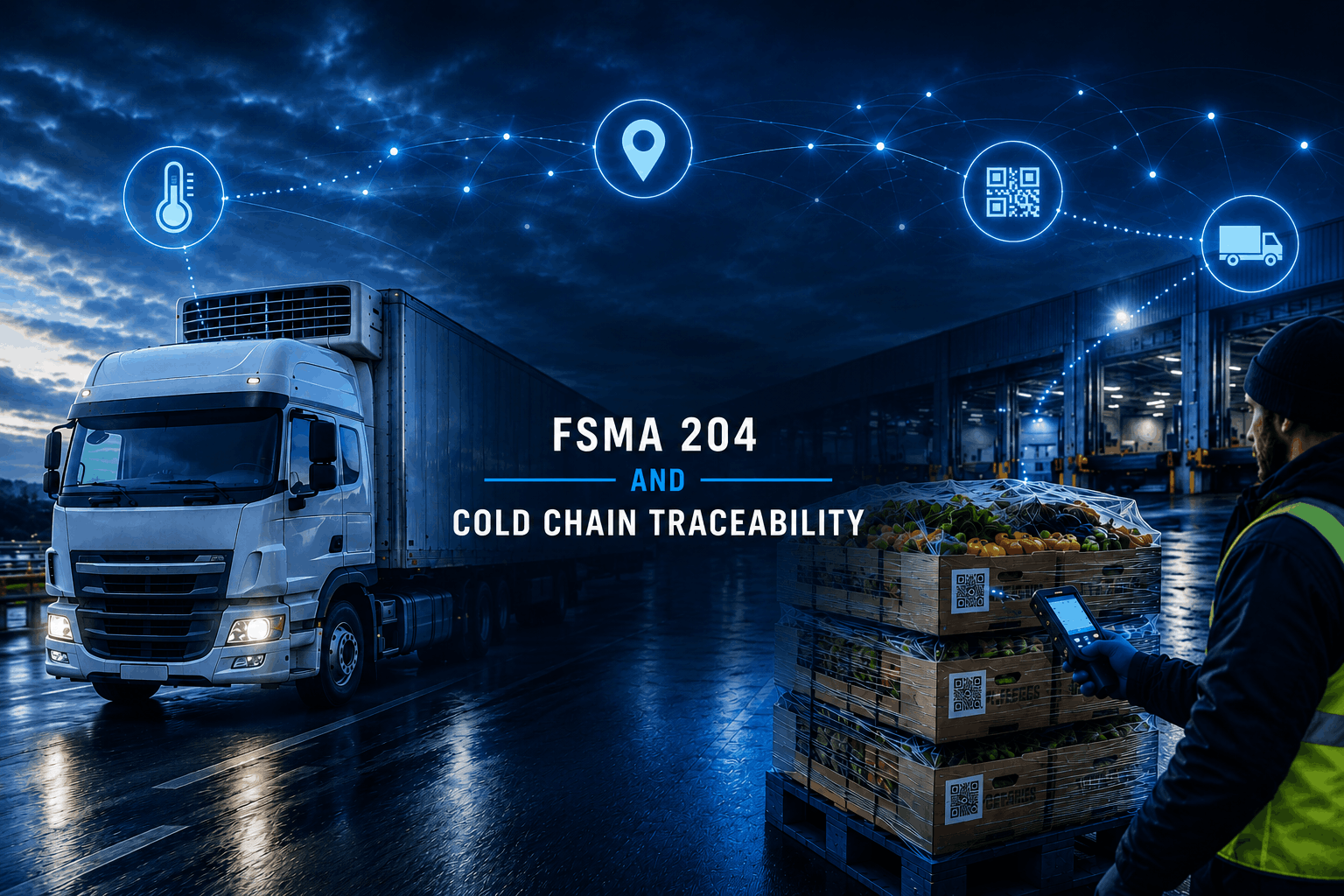
Preparing today for the future of food traceability, where visibility, compliance, and cold chain performance work together seamlessly.
The food supply chain is entering a new era of accountability. With the Food Safety Modernization Act (FSMA) 204 introducing enhanced traceability requirements for organizations handling foods listed on the FDA Food Traceability List, shippers must begin preparing now, even though enforcement is not expected before July 20, 2028.
For cold chain operations, compliance extends beyond transportation. It requires complete visibility, accurate documentation, real-time data sharing, and strong collaboration across the supply chain. Organizations that invest in these capabilities today will be better positioned to meet future requirements while improving operational performance and customer confidence.
As one of the leading logistics transportation companies, RWI Logistics helps businesses strengthen supply chain visibility, manage temperature-sensitive freight, and develop resilient logistics strategies that support long-term compliance and growth.
Explore
The New Standard
Understanding FSMA 204 and Its Impact on Cold Chain Shippers
FSMA 204 introduces enhanced traceability requirements for businesses that manufacture, process, pack, or hold foods included on the FDA Food Traceability List. Covered organizations must maintain Key Data Elements associated with Critical Tracking Events throughout the movement of food products.
When requested by the FDA, companies must provide traceability records within 24 hours. This requirement places significant pressure on supply chain partners to maintain accurate records and ensure information is accessible quickly.
For cold chain shippers, traceability is closely tied to product integrity. Fresh produce, seafood, dairy products, frozen foods, and pharmaceuticals all require continuous monitoring throughout transit. Any gap in visibility can create compliance risks and impact product quality.
Planning Ahead
Why Preparation Cannot Wait Until 2028
Although enforcement remains several years away, building a comprehensive traceability strategy requires time, technology, and coordination. Many organizations still rely on disconnected systems, manual processes, and fragmented communication across suppliers, carriers, warehouses, and customers.
These limitations can create challenges when responding to traceability requests or investigating food safety concerns. Forward-thinking logistics transportation companies are already helping shippers build the infrastructure needed to improve transparency and accelerate access to supply chain information. By acting now, businesses can avoid rushed implementation efforts and create a stronger foundation for future growth.
Supply Chain Transparency
The Role of Shipment Visibility in FSMA 204 Compliance
Visibility is one of the most important components of modern cold chain logistics. FSMA 204 requires organizations to know where products have been, who handled them, and what occurred during every critical movement event.
Achieving this level of transparency requires access to accurate transportation and tracking information throughout the shipment lifecycle.
RWI Logistics leverages integrated technology, transportation management expertise, and data-driven processes to provide enhanced visibility across complex cold-chain networks. This approach enables organizations to gain better insight into freight movement, monitor transportation activities, and improve decision-making across the supply chain.
When visibility improves, companies can respond more quickly to potential disruptions, reduce risk, and strengthen overall compliance readiness.
Protecting Product Integrity
Strengthening Traceability Through Refrigerated Transportation
Maintaining product quality during transportation is a critical component of food traceability.
A dependable refrigerated transport service helps ensure products remain within required temperature ranges while supporting accurate documentation throughout transit. Temperature-sensitive commodities require consistent monitoring, proactive management, and experienced logistics partners capable of handling specialized transportation requirements.
RWI Logistics offers comprehensive refrigerated transport service solutions for fresh produce, frozen food, seafood, pharmaceuticals, and other temperature-controlled products. With extensive experience managing refrigerated freight, the company helps shippers maintain product integrity and improve supply chain visibility.
An effective refrigerated transport service not only protects product quality but also enhances traceability, supporting regulatory compliance.
Working Together
Partner Alignment Is Essential for Success
FSMA 204 compliance cannot be achieved by a single organization acting alone.
Manufacturers, suppliers, carriers, warehouses, distributors, and retailers must work together to ensure traceability information is collected, maintained, and shared consistently. Clear communication and standardized processes are essential for creating a connected supply chain.
RWI Logistics emphasizes collaborative partnerships and customized transportation management solutions that align stakeholders around common goals. Through data-driven insights and continuous improvement initiatives, the company helps organizations strengthen coordination across their logistics networks.
This collaborative approach becomes increasingly valuable as food traceability requirements continue to evolve.
Future Ready
Building an Audit-Ready Cold Chain Strategy
Preparing for FSMA 204 is about more than regulatory compliance. It is an opportunity to create a stronger, more resilient, and more efficient supply chain.
Organizations should focus on:
-
Improve end-to-end shipment visibility
-
Enhance data collection and record management
-
Strengthen communication across partners
-
Implement technology that supports traceability
-
Work with experienced cold chain logistics providers
-
Build scalable processes for future regulations
By investing in these capabilities today, companies can reduce compliance risks while improving operational performance.
Proven Cold Chain Expertise
Why RWI Logistics Is a Trusted Partner for Cold Chain Traceability
As one of the most experienced logistics transportation companies serving temperature sensitive industries, RWI Logistics combines cold chain expertise, transportation management capabilities, advanced technology, and business intelligence to help customers navigate increasingly complex supply chain challenges. The company specializes in refrigerated transportation solutions, cold chain execution, freight management, and customized logistics strategies designed to improve visibility and performance.
For organizations preparing for FSMA 204, choosing a logistics partner with proven cold chain experience can provide a significant advantage. RWI Logistics helps shippers create connected supply chains, strengthen traceability efforts, and maintain confidence in an evolving regulatory environment.
Prepare for FSMA 204 with RWI Logistics
FSMA 204 is transforming the way food traceability is managed across the supply chain. While enforcement is not expected until 2028, organizations that begin preparing today will be better equipped to meet future requirements and strengthen their competitive position.
By improving visibility, enhancing documentation practices, partnering with experienced logistics companies, and investing in reliable refrigerated transport solutions, shippers can build a more resilient and audit-ready cold chain operation.
RWI Logistics continues to help businesses navigate these challenges through innovative cold chain solutions, transportation expertise, and data-driven logistics strategies that support compliance, efficiency, and long-term success.